Saturday, June 30, 2012

Movie Review: Fortress


1. Short review: 

2. Long review:
2.1. What I liked: The airplanes and the CGI.
Roller-coaster or walk-in-the-park? Roller coaster.

2.2. What I did not like:  The acting and some of the writing. The acting was cheesy but okay. The writing suffered from a lack of research.

2.3. Who I think is the audience: Air combat history buffs.

2.4. Is the movie appropriate for children to see?  No. Profanity and lots of it.

2.5. On the basis of viewing this movie, will I pay to see the sequel? If there were a sequel, I would pay the same I paid to see Fortress. I guess that's a left-handed 'yes'.

2.6. Other:  How I rate movies.
-- I want my money back.
-- Worth a rental, not more. <-- Fortress 
-- Worth first-run theater price once.
-- I will pay first-run theater price to see it again.

I saw Fortress on cable. I think it went straight to DVD; that is, it never played in theaters. There is some evidence that it played theaters in England.

The plot in a nutshell:
The B-17 Lucky Lass flew bombing missions over Italy from a North African base. Her aircraft commander was killed on one mission, so Wally (Donnie Jeffcoat), the right-seater, got promoted to the left seat; that is, he became the aircraft commander. The Lucky Lass got a new right-seater, Michael (Bug Hall), and two replacements for the waist gunners who were also killed on the last mission. 

Michael had trouble fitting into the crew, but with time and effort he won their respect and led the crew out of danger (kinda, kinda not) when Wally got killed. Michael got promoted to the left seat; new replacement showed up; rinse and repeat.
For the little I paid for this movie, I enjoyed it. The acting was so-so, but I liked Howard Gibson in the role of Caparelli, the maintenance chief.

I liked the CGI airplanes. They were well done. I don't know if P-40 Warhawks ever flew escort for B-17s, but the P-40s in the movie were brilliantly done. I especially liked the yellow checkerboard tail motif.

In the movie, a P-40 flew a steep climbing turn to shake off and take out a ME 109. I don't know if a P-40 jock ever did that, but I know it can be done and with that exact maneuver. I had two friends who flew F-51s (the Air Force designation for the Army P-51) and took out F-86s with that manuver. I also met an Egyption Air Force major who use the same maneuver in '73 with a MIG 19 to take out an Israeli F-4. Would an American P-40 jock in '43 have the stuff to take out a Luftwaffe 109 pilot with that maneuver? Possible, but not likely.

Fortress showed that good CGI can be done cheaply. I said it is worth a rental, and -- since they released it straight to DVD -- that means they succeeded. Check it out.

Addendum:

There is what must be an administrative hearing before the squadron commander over a theft of officers' club scotch by one of the crew of the Lucky Lass. The prosecuting officer cites the UCMJ (Uniform Code of Military Justice). This is an anachronism. The UCMJ did not exist until 1950. During the Second World War, the US Army Air Corps operated under the Articles of War. Something the writers would have discovered had they googled the UCMJ and spent 10 minutes reading the article.

Second addendum:

At the end of the movie, the producers complained that no one who had a flying B-17 let them (the producers) use their (the owners') plane. I saw why. Look, boys, just 'cause y'all wanna make a picture 'bout B-17s don't mean I'm gonna turn cartwheels over the opportunity to show off my plane. I get them opportunities twice a week. And they pay. Y'all want my plane in your picture? Pony up some money. Else, go on back to Hollywood and get your special effects department to whip up somethin'.

Third addendum:

Bug Hall? Your headliner is named Bug? That was cute when he starred in the movie of The Little Rascals, but that was eighteen years ago. How can anyone take you seriously as an actor when you insist on being called Bug? Your name's Brandon. Use it.

Fourth addendum:

I discovered that the checked-tail P40s in the movie truly existed. They were from the 325th Fighter Group. The group flew P40s from April to September 1943 when they swapped their Warhawks for Thunderbolts; half a year later they were flying Mustangs. And, yeah, they escorted bombers, and they often defeated 109s until Messerschmidt developed the 'f' model. 30 July 1943 they baited the Jerries to come up and play and shot down more than half of those who took the bait.

Here is a picture of checked-tail P40:
I have never seen a P40 with such a long canopy before. Unusual modification, that.

YMMV.

2.7. Links: IMDb review

Thursday, June 28, 2012

Movie Review: The Amazing Spiderman


1. Short review: 

2. Long review:
2.1. What I liked: The cameo appearance by Stan Lee (LOL funny). Andrew Garfield as Peter Parker; he looked the part.
Roller-coaster or walk-in-the-park? Roller coaster, but the wait to get on the ride was too long.

2.2. What I did not like:  A lot.
1. The story was Swiss cheese. There were too many holes in.
2. The slow pace. At 2 hours 16 minutes, the movie is AT LEAST half an hour too long. Be sure to go to the toilet RIGHT BEFORE you see the movie.
3. The set-up for the sequel. It comes after the credits start to roll (after the producer and director credits but before the cast credits). And it is not needed.

2.3. Who I think is the audience:  Marc Webb (the director).

2.4. Is the movie appropriate for children to see?  Yeah, but take 'em to see Brave instead.

2.5. On the basis of viewing this movie, will I pay to see the sequel? No.

2.6. Other:  How I rate movies.
-- I want my money back.
-- Worth a rental, not more. <-- The Amazing Spiderman
-- Worth first-run theater price once.
-- I will pay first-run theater price to see it again.

The Amazing Spiderman took an hour to get going. The first hour was just set-up and scenery shifting. The second hour was full of action but disjointed.

On the right side, Andrew Garfield gave a great rendition as Peter Parker; equal to or better than Toby Maguire's.

On the left side -- and there is a lot on the left side, the story had more holes in it than a wheel of Swiss cheese. Five samples (there are many, many more):

1. The young Peter Parker discovered his home had been broken into. His father dug a file out of the false bottom in his desk drawer, packed up his family, took Peter to stay with his Aunt Mae and Uncle Ben, and disappeared. Why run? Why leave the kid?

2. Peter Parker said his own self that he worked up his web and webspinners in his little lab. He was a tech wizard. So why did he haul around a butt load of film cameras?

3. With his new-found powers, Peter Parker taunted his high-school nemesis Eugene 'Flash' Thompson on the basketball court and leaped from half court to dunk and shatter the backstop. What did that display earn him? A stiff talking-to from the principal with his uncle present.  Were the writers brain-dead?

4. Uncle Ben got shot, and Peter hunted his killer. For a while. Then he gave up that hunt. Never found the killer. Did the writers think we wouldn't notice?

5. In the final chase, a cop shot Spiderman in the leg (from a hundred yards with a pistol while Spiderman was climbing the face of a building!). When the chase was over, Peter went home to Aunt May. She saw the scratches on his face and gave him a hug. Never a word about the gunshot wound in his leg. (Oh, BTW, the cop shot from Spiderman's left side but the entry wound was in the exterior of his right thigh with no noted exit wound.)
My wife had a two-for-one coupon that the theater honored. At that, it was worth the price of admission. Had I paid two full ticket prices, I would have been angry.

All in all, I would have preferred to stay home and watch John Carter on cable. 

YMMV.

2.7. Links: Rotten Tomatoes review
 
2.8. See the movie:  Find the show times for your location.

Friday, June 22, 2012

eBook Review: Half a Wing, Three Engines and a Prayer


Brian O'Neill, Half a Wing, Three Engines and a Prayer

Product Details

  • File Size: 5701 KB
  • Print Length: 454 pages
  • Simultaneous Device Usage: Up to 4 simultaneous devices, per publisher limits
  • Publisher: McGraw-Hill; 1 edition (April 30, 1999)
  • Sold by: Amazon Digital Services
  • Language: English
  • ASIN: B006B7LRQW
  • Text-to-Speech: Enabled
  • Average Customer Review: 4.7 out of 5 stars (43 customer reviews)
  • Price: $9.99
1. Short review: 

2. Long review:
2.1. What I liked:  Stories of the young men who flew the Big Bird early (1943-early 1944) over Germany. Follow-up on their lives after the war. The photos.
Roller-coaster or walk-in-the-park? Because it is a book about aerial combat, it should be a roller coaster. Sometimes it is. But it is a roller coaster with all the excitement of a Travel Channel travelogue. I never felt like I was there.

2.2. What I did not like:
2.2.1. The formatting. Evidently this 'eBook' was scanned from a paper version. The quality of the print runs the gamut from passable to difficult. The best that can be said for it is that it is not illegible. Brad Geyser's Amazon review has more details.
2.2.2. The time to load. Perhaps the book loads slow because of all the photos in it. I dunno. But it took 9 seconds to load. Each time. Every time. Yes, I counted.
2.2.3. The lack of excitement. I don't know how he did it, but Mr O'Neill drained all the adventure from the stories of these men. As B. Barrett said in his Amazon review, the account is "[f]actual but dry". Even when I read the story of Staff Sergeant Joseph Sawicki, one arm shot away, buckling two wounded crewmates into their 'chutes and booting them out of their flaming Fortress to save their lives, I did not feel anything. Rightfully, Sawicki's actions should have been honored with a posthumous award of the CMoH. How do you drain that heroism of feeling? I dunno. Ask Mr O'Neill. He did it.

2.3. Who I think is the audience:  The families of the airmen named in the book. If your daddy or your granddaddy is in the book, buy the trade paperback and highlight his name.

2.4. Is the book appropriate for children to read?  Yes.

2.5. On the basis of reading this book, will I buy the author's next book? No.

2.6. Other:

     This book started as a factual account of the experiences of Bob Hullar's B-17 crew. Somewhere it morphed into an aggregate personal oral history of the 303rd Bomb Group. Well, at least an aggregate personal oral history of the missions that Bob Hullar flew.
     The problem is that Mr O'Neill was not there. He interviewed these men decades after the fact. Any emotion they felt when they recalled these events -- and I am certain they felt emotion -- was lost in the translation.
     I do not have a relative who flew with the 303rd. I never felt connected to the events Mr O'Neill related. But I got something that many related to 303rd crew may have missed: A feeling of outrage at the haphazard way the Eighth Air Force threw away the lives of bomber crews on disjointed missions that contributed nothing to winning the war.
     For example, the Eighth Air Force sent unescorted bombers into Germany in 1943 to bomb industrial targets like the ball bearing factories at Schweinfurt. Evidently they had read Giulio Douhet's The Command of the Air (aka 'The Theory of Frightfulness') and bought into its tenets. These raids did not work. And the price was excessive: 25% losses on that raid.  And still the command ordered more raids like it.
     The RAF won the Battle of Britain because the Luftwaffe turned from bombing airfields to bombing London. You would think at least the Brits would learn from their own recent history: Knock out the enemy air force first. But, no, the Italian captain must be right. We can destroy the morale of the enemy from the air. We don't need no stinkin' infantry. "[Douhet] believed that 300 tons of bombs over the most important cities would end a war in less than a month. This can be compared with the fact that the allies during War War II dropped in excess of 2.5 million tons of bombs on Europe without this being directly decisive for the war."
     I can justify bombing the submarine pens at Bremen. I can justify bombing railroad centers. I can justify bombing the V-1 launch sites. But bombing ball bearing factories? Better to spend the bombs, fuel, and men bombing Luftwaffe bases. Or Wehrmacht depots.
     The best part of the book relates the lives of the B-17 crews after they had flown through Hell. It made me feel good to know that they came back to live full lives. God knows they deserved them.
     Another reviewer wrote that the book made him feel as if he flew with the crews of the 303rd on their missions, but I never felt that way.
     I wanted to like this book, but I didn't. Still, it is a flying book, so it gets three stars from me.

Addendum:
     Years ago, I had a friend who flew in a B-17 crew in the Eighth Air Force. I think he was a gunner, but honestly I don't recall. I heard him read a poem about his piece of the war. He wrote of his father eagerly questioning him about his experience; his father had missed service in the First World War and wanted his son to fill the hole in his life.
     All my friend could recall were the cold barracks with a single stove for heat, the thin blankets, getting the shakes when on leave at Blackpool, the terror in the air over Germany -- terror without details, and moving one cot closer to the
stove and adding one more blanket to his covers when a squadron mate did not return. That was the story of his war: One cot closer to the fire.
     I heard my friend read that story and I knew in my bowels that there was no glory in the thin air over Germany. Just fear.

Second addendum:
     My notes from the book show four typos:
     1. Location 951: VIII vice VII,
     2. Location 4281: were vice was, 
     3. Location 5233: 1966-1967 vice 1966-1977, and
     4. Location 5412: Consul vice Counsul.

     I highlighted nine passages in the book:
     1. "[Y]ou heard that sound [of B-17 engines starting], you knew for sure that today men were going to die."
     2. "[T]he high command thought we were expendable."
     3. "I always had the feel- ing (sic) that the losses were justifiable some way."
     4. "After 16 missions they were the most senior crew in the Squadron." (What does this say about the loss rate? Nothing good.)
     5. "According to the metro winds we got in our briefing flight plan, the winds were supposed to be 320 degrees at 110 knots (!) at bombing altitude of 25,000 feet. I could tell from the way the winds were drifting us on the way to the English coast that they were not as metro had forecasted and the metro winds for the balance of the trip wouldn't hold true either." (Best weather advice I ever got from a flight instructor: Treat all forecast winds as headwinds.)
     6. "There was much anger among the 41st CBW's bomber crews at debriefing. As Elmer Brown recalls, 'I was furious about them having sent us up in the dark taht way, so that those midair collisions could happen. This was one the high command really screwed up.'" (Yeah, they screwed up with radio silence, too. IMO Eaker, Doolittle, and Spaatz all should have been court-martialed for dereliction of duty and manslaughter. Pour encourager les outres.)
     7. "Two minutes of combat is a lifetime." (Amen.)
     8. "[T]he day's operations really underscored the impact that seasoned combat veterans could have on the outcome of a mission. The skill and determination that Brown and McCormick showed was what made the difference between a successful strike and a failed one . . . ."
     9. "All during these years, Bud Klint's priorities were the same as those of the other veterans and fathers of his generation -- earn an income, raise his children . . . , get ahead in his career -- but in all this time Klint's World War II experiences were 'always there. In the background.'" (This one quote summarizes the book.)

     Three stars out of five. YMMV.

2.7. Links:
Bert Stiles, Serenade to the Big Bird (If you really, really want to read a book about B-17 crew, read this one. One of the best air combat books ever written.)
B-17 Flying Fortress in Action (coffee table picture book)
B-17 in Action (No. 63) (coffee table picture book)
B-17 in Action (No. 12) (coffee table picture book)

2.8. Buy the book:  Half a Wing, Three Engines and a Prayer

Thursday, June 14, 2012

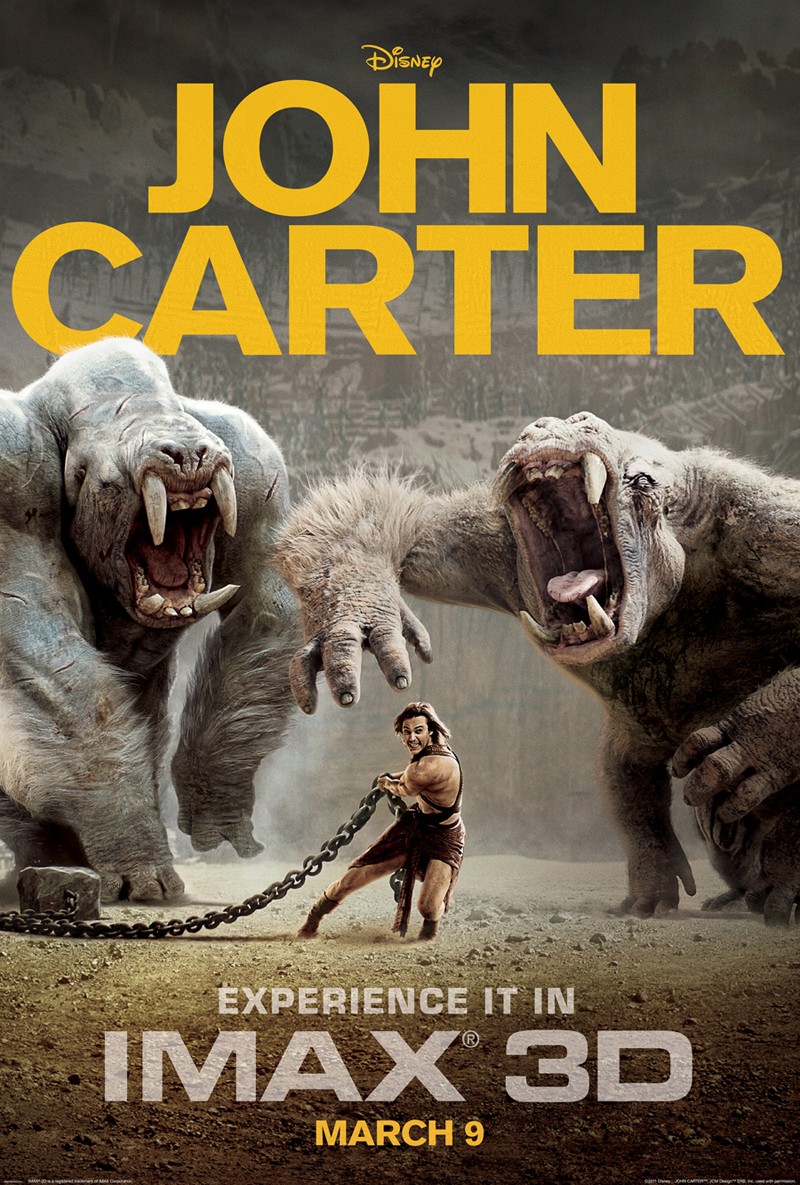
Movie Review: John Carter deja vu cubed


John Carter [of Mars]

1. Short review: 

2. Long review:
I saw the movie again and again on cable. I still like it a lot.

My cable has video-on-demand, which means I control the delivery like it was a DVD. I got to play with the timing.

If you see the movie for the first time on DVD or VOD, I suggest the following:

2.1. Forget the title. Think of the movie as Barsoom. At the end, this will have impact.

2.2. Start the movie five minutes and thirty seconds (00:05:30) in. The prologue that eats up that time is disjointed and adds nothing. The editors should have deleted these scenes. You will have to do it instead.

2.3. To get the most from the experience, read the first two books in the John Carter series before you see the movie: A Princess of Mars and The Gods of Mars.

Enjoy the movie.

3. Links:

Saturday, June 9, 2012

eBook Review: High Adventure


James Norman Hall, High Adventure: A Narrative of Air Fighting in France

Product Details

  • File Size: 175 KB
  • Print Length: 252 pages
  • Sold by: Amazon Digital Services
  • Language: English
  • ASIN: B004TPDZ4A
  • Text-to-Speech: Enabled
  • Lending: Enabled
  • Average Customer Review: no customer reviews
  • Price: $0.00 
1. Short review: 

2. Long review:
2.1. What I liked:  Casual style.
Roller-coaster or walk-in-the-park? Because it is a book about aerial combat, it should be a roller coaster, but it is more a walk in the park.

2.2. What I did not like: The lack of excitement.

2.3. Who I think is the audience:  WWI aerial warfare history buffs.

2.4. Is the book appropriate for children to read?  Yes.

2.5. On the basis of reading this book, will I buy the author's next book? No, but I will on the basis of reading his other works.

2.6. Other:

     This is a fictional account of Hall's service with the Lafayette Escadrille.
     It read like a fictionalized diary. The organization lacked coherence. It moved slowly from getting lost on patrols to fighting le cafard in barracks. The little organization there is broke down completely once Hall was shot down and captured.
     Years ago, I read Falcons of France and enjoyed it. High Adventure read like the first draft outline of Falcons of France.
     I wanted to like this book, but I didn't. For free, it's worth a download.

Addendum:
     Even though Hall fictionalized his account, this bit shocked me. I believe it to be true.
     [Chapter] VI. A BALLOON ATTACK. (p 143; location 1192)
     Hall wrote that two flights of three were detailed to attack German balloons (Drachen). Numbers 1 and 2 of each flight were to attack the Drachen with rockets. Number 3 was to fly cover for Numbers 1 and 2.
     Number 1 was to fly over the first Drachen, throttle back to idle, and dive vertically on his target. When the Drachen filled his gunsight, he was to loose his rockets. Hall does not say, but I believe these were Le Prieur rockets.
     If Number 1 was not successful and did not flame the first Drachen, then Number 2 was to attack the same balloon. If Number 1 was successful and flamed the first Drachen,  then Number 2 was to attack another Drachen. But first, Number 2 was to "attack the observers [from the flamed Drachen] in their parachutes." (p 146; location 1214).
     In other words, the Aeronautique Militaire ordered its airmen to shoot defenseless men. Hall rationalized an excuse for this, but he admitted that neither he nor his wingman liked it.
     I have no words to express how revolted I felt about this order. Shooting a defenseless man is not an act of war. It is murder. The order was unjustifiable and illegal by the standards of war and the laws of any civilized nation. I am shocked that the French would order such a thing.
     I can justify collateral damage, but I don't like it. I find no justification for this order, nor do believe that there can be any.
     If a gov't has to resort to such as this in order to survive, it were better for humanity that such a gov't fall and be forgotten.

2.7. Links:  James Norman Hall 

2.8. Buy the book:  High Adventure

Saturday, June 2, 2012

eBook Review: The Three Conjectures


Richard Fernandez, The Three Conjectures

Product Details

  • File Size: 111 KB
  • Print Length: 32 pages
  • Sold by: Amazon Digital Services
  • Language: English
  • ASIN: B006SOCAO6
  • Text-to-Speech: Enabled
  • Lending: Enabled
  • Average Customer Review: 5.0 out of 5 stars (1 customer review)
  • Price: $1.99 (Warning:  I have seen the price vary from $1.99 to $3.99.)
1. Short review: 

2. Long review:
2.1. What I liked:  No misspellings.
Roller-coaster or walk-in-the-park? Neither; non-fiction.
This book wasted my time. It is a collection of essays taken from Mr Fernandez's blog. It came late to the party, trumpeted old ideas as new, and added nothing to the discussion

2.2. What I did not like: Everything in the book.

2.3. Who I think is the audience:  Sogenannte Harvard scholars.

2.4. Is the book appropriate for children to read?  No foul language but I would not want to expose children -- or adults -- to this ostentatious, factually inaccurate, logically flawed fraud of a collection.

2.5. On the basis of reading this book, will I buy the author's next book? No. No. Never.

2.6. Other:
con·jec·ture (kÉ™n-jÄ•kchÉ™r) n.
1. Opinion or judgment based on inconclusive or incomplete evidence; guesswork.
2. An opinion or conclusion based on guesswork.
-- The American Heritage Dictionary
      Mr Fernandez was born in the Phillipines but holds Australian citizenship. He earned a master's degree in public policy from Harvard.
     The book is a collection of Mr Fernandez's blog posts as essays. The book lacks a Table of Contents. In order of appearance, the essays are (cumulative percentage of the work give in parentheses)
1) The Judge of All the Earth, [no date] (50%);
2) The Bomb Rises Again, May 6, 2003 (58%);
3) The Three Conjectures, September 19, 2003 (82%);
4) Abu Ghraib, May 7, 2004 (95%); and
5) The Fable, August 17, 2006 (100%).
     'The Judge of All the Earth' is an apologia for all who act without certainty; that is, everyone, but especially American presidents. The instances cited include FDR greenlighting the Manhattan Project, Truman choosing to drop atomic bombs on Japan, and George W. Bush invading Iraq on the weight of the evidence that Hussein was building nasty weapons. In Mr Fernandez's words, "[t]he challenge humanity confronts in the second decade of the 21st century is the same as Abraham's: to find a way to survive and still remain righteous."
     'The Bomb Rises Again' bemoans the fact that nuclear proliferation makes the use of nuclear weapons more likely. Here Mr Fernandez makes a factual error. He avers that the US Navy mounted nuclear warheads on SAMs. For his source, he cites the New York Times, a newspaper whose contact with factual accuracy is only tangential and fleeting.
     'The Three Conjectures' lays out Mr Fernandez's case that acquiring nuclear weapons will destroy Islam. The three conjectures are
1) Terrorism has lowered the nuclear threshold,
2) Attaining WMDs will destroy Islam, and
3) The war on terror is the 'Golden Hour' -- the final chance.
His argument is that radical Moslems will use nukes the first chance they get. The West -- read, the US -- in retaliation will slag the Moslem world. Moslems will ceast to exist. 
     'The Three Conjectures' also contains another error. It states "[t]he terrorist intent to destroy the United States . . . has been a given since September 11." Perhaps that is true for Mr Fernandez. I assure you that US intelligence services were aware of terrorist intent much, much earlier, and the people of New York City were put on notice of it the morning of 26 February 1993 when terrorists exploded a bomb in the basement of the World Trade Center.
     'Abu Ghraib' is a mishmash of a tale that grieves the loss of morality in war.
     'The Fable' is Mr Fernandez's vision of how Osama bin Laden will triumph even in death, because by destroying Islam the West -- read, the US -- will lose its soul. (When Mr Fernandez wrote this piece bin Laden lived.)

     After reading this work, I had the feeling that I had been regaled with a cocktail-party theory by a self-indulgent, self-righteous intellectual who marshaled for evidence only dubious newspaper reports. All I lacked was a stiff drink to enable me to swallow it. But the theory was delivered glibly with ten-dollar words and phrases that mimic erudition. This gloss of linguistic fluency fools other ignorant intellectuals who get their facts from NYT headlines and count themselves informed. Worse, the work is arrogant. It implies that these thoughts are new with it.
     Pthu! I would rather have a beer and hear a plumber describe his day clearing a blocked sewer.

     Let me tell you how the real world works.
     Thirty years ago, as a junior USAF officer, I sat in a seminar which had as its purpose to get us -- junior officers -- to think the unthinkable: when do we use nuclear weapons. Part of thinking the unthinkable was to figure out what the Russians were thinking, because they, too, had nukes.
     Why did the Air Force spend considerable time and money having all its junior officers study this question? Because the Air Force knew that some few of those junior officers would rise to become generals who had to think the unthinkable, and the Air Force wanted those generals to have the experience of thinking the unthinkable before that heavy responsibility fell on them. Folks, that's wisdom.
     The nuclear use equation reduces to two variables: capability and intent. We were told in the seminar that we had to assume that Russian nukes would be 100% effective; that is, all rockets would launch, all guidance would work correctly, and all warheads would detonate. All that was left was intent.
     In the seminar, I argued that the 100% effectiveness assumption was flawed. It was based on lack of evidence. That lack pointed up a hole in our intel. I also argued that the Russians were rational and had no intent to use nukes. Why? I can't tell you. You don't have the security clearance required to hear my reasons or the need to know.
     When the Soviet Union collapsed, I was doing performance analyses for the USAF Satellite Control Network. I was sitting with a contractor and a young captain over coffee discussing the fall of The Evil Empire. The contractor lamented its passing, because, he said, it would make his job and the jobs of his coworkers superfluous. I disagreed.
     The fall of the Soviet Union meant that the menace of nuclear exchange lessened dramatically. We could send a large fraction of our boomers (SSBNs) to the pens and keep them there. We could decommission some older ICBM wings and strategic bomber wings. We could call troops home from NATO, maybe stand down an armored division. But we needed more, not less, intel.
     When the USSR lived the threat to the US was monolithic. We only had to consider one enemy. Our intel focused on him. But with the fall of the Soviet Union the threat fractured. Now we had to look everywhere, and that would require more intel resources and more intel personnel. The threat was no longer existential for the nation, but the opportunity for multiple Pearl Harbor incidents exploded.
     The captain nodded. He got my message. Unfortunately, Congress did not.

     The Three Conjectures deduces that use of nuclear weapons boils down to capability and intent, something I knew thirty years ago. The Soviets had the capability but not the intent. Islamic terrorists, the book says, have the intent but not the capability. I am confident that, as I studied the problem thirty years ago, there are young men in blue today who study today's problem. And tomorrow's problems. And, unlike Harvard intellectuals, they will not be conflicted between the choice of unleashing Hell and the loss of their 'righteousness'. They will do what they have sworn to do: They will defend the Constitution of the United States against all enemies, foreign and domestic.
     Sleep well tonight. You don't have to think the unthinkable. There are professional soldiers who have done that, do that, and will do that so you don't have to. And those soldiers do not abrogate their duty to the conjectures of Harvard intellectuals.

     YMMV.

2.7. Links:  Richard Fernandez at The Belmont Club

2.8. Buy the book:  The Three Conjectures

Tuesday, May 15, 2012

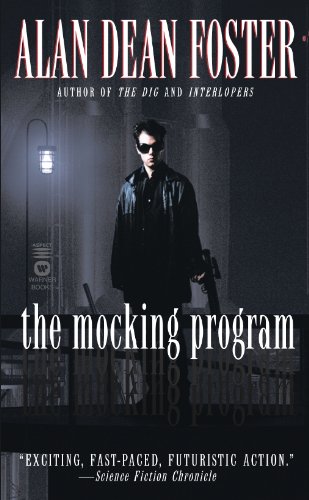
Odd Thoughts: The Mocking Program

You see this book?


     I argue that the first two chapters of this book are the best first two chapters in all of science fiction. And yet I hate this book.
     I read the book all the way through. Here's how it happened.
     I was standing in my friendly, neighborhood library where I had returned a Stuart Woods book (always a good read, sometimes a great read), and I was looking for another fiction book to entertain myself with betwixt and between my research on the Mayan calendar. I wandered over to the science fiction section (I love scifi) and started pulling volumes based on the attractiveness of the dust jacket.
     Nah, read that.
     Hmm. Kim Stanley Robinson. Blue Mars. Flip, flip. Dull start. No.
     Christ, don't they have any Cyril Kornbluth? How 'bout Harry Harrison? I could go for some Stainless Steel Rat right now. Or Laumer's Retief.
     Wait. What's this? The Mocking Program. Any good?
     So I sat myself down and read the first chapter.
     Wow! Great writing! Seriously edgy. And a gripping story hook!
     But a little voice in the back of my head whispered, "Remember that writer -- whatshisname -- who said he put ninety percent of his effort into the first chapter? What if this guy did the same?"
     So I read the second chapter.
     And . . .
     Wow! Great writing! Seriously edgy. And the hook is set deeper!
     I took the book to checkout and took it home. Read the rest.
     As I recall, The Mocking Program has 28 chapters. I reached the mountaintop in Chapter 2. From there, it was a twenty-six chapter slide into the pit. I never felt so let down in my life.
     What did I learn from this experience?
     Curiously, I still judge books by the first two chapters. Silly me.
     But I did learn that great writing -- Foster still wrote well in Chapter 28 -- cannot save a weak story.
     Why was the story weak?
     Well, what makes a story strong?
     Stargate SG-1 episodes in seasons one and two were, more often than not, strong. Why?
     Peter Williams.
     Peter Williams played Apophis, Team SG-1's nemesis. He gave them a strong, powerful, handsome enemy. More, he gave viewers someone they loved to hate. And he was a human figure. Yeah, I know he was possessed by a Gou'ald, but the face we saw was human.
     So what, then, makes a story weak?
     The lack of a strong, powerful, handsome, HUMAN-FIGURED enemy.
     In the end < spoiler alert > the enemy in The Mocking Program is a computer.  That did not work for Colossus: The Forbin Project. Foster could not make it work here, either.
     When Apophis died, we felt pity for the person whom the Goa'uld had inhabited. When the program winked out in The Mocking Program, I did not care. I was just glad it was over.
     Now, there are many, many good things about the book. Foster fully realized his Mexamerica. Great world-building. It feels real.  On the line level, great writing that has an edgy, gritty feel.
     If you are a writer, it is worth some time to study this book. What works? What does not work? Why?
     It ain't a good model, but it can be a bad example
     YMMV.

Buy the book:  The Mocking Program   $9.99 at Amazon
____________________

Friday, May 4, 2012

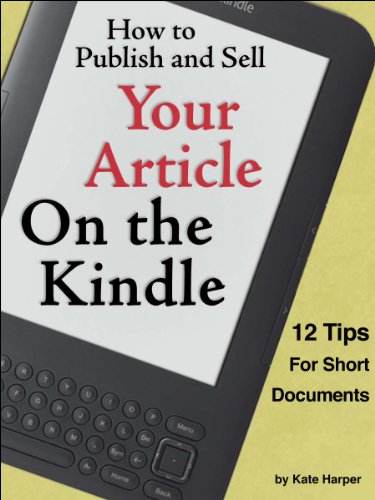
eBook Review: How to Publish and Sell Your Article on the Kindle


Kate Harper, How to Publish and Sell Your Article on the Kindle: 12 Tips for Short Documents

Product Details

  • File Size: 868 KB (!?)
  • Print length: 68 pages
  • Sold by: Amazon Digital Services
  • Language: English
  • ASIN: B004MDLKKK
  • Text-to-Speech: Enabled
  • Lending: Enabled
  • Average Customer Review: 4.8 out of 5 stars (83 customer reviews)
  • Price: $0.99

1. Short review: 

2. Long review:
2.1. What I liked:  Useful tips -- with step-by-step instructions and illustrations -- for publishing short pieces for the Kindle.
Roller-coaster or walk-in-the-park? Neither; non-fiction.
This book give good value for your money.

2.2. What I did not like: Nothing that I can think of.

2.3. Who I think is the audience:  Article writers. Short story writers.

2.4. Is the book appropriate for children to read?  Yes.

2.5. On the basis of reading this book, will I buy the author's next book?  Yes.

2.6. Other:  I have already used some of the tips from Ms Harper's pamphlet. She put me onto the fact that I could upload to Amazon with .doc files. (Who knew? Not me.) Because I can produce .doc files myself, I don't have to pay a formatter. (Sorry, Rob.) This means I can upload my short stories profitably.

I used the highlight and note feature of my Kindle frequently with this work. This will make it easier to find what I want when I go back and reference this work. I expect to refer to it frequently in the future.

The pamphlet takes up only 45% of the work. The rest is filled with useful appendices.

There are many illustrations in the pamphlet. These may account for the large file size.

If this sounds like a lukewarm recommendation, my apologies. It is not. I heartily recommend this pamphlet to writers. It is worth your money.

2.7. Links:  Kate Harper's blog, Facebook, Twitter

2.8. Buy the book:  How to Publish and Sell Your Article on the Kindle: 12 Tips for Short Documents
____________________

Sunday, April 29, 2012

eBook Review: Citizen of the Galaxy


Robert A. Heinlein, Citizen of the Galaxy

Product Details from Baen's Books

Published 6/12/1987
SKU: 9781416505525
Ebook Price: $6.00 
    1. Short review: 

    2. Long review:
    2.1. What I liked:  Robert Heinlein's masterly writing. Hemingway, Steinbeck, Clavell, and Heinlein were the best writers of the 20th century.
    Roller-coaster or walk-in-the-park? Both and both are equally engrossing.
    This book gives outstanding value for your money. It was first published in 1957 as a Serial in Astounding. Later that year, Scribner published the hardback and marketed it as a juvenile (with a first edition cover that really, really sucked).

    2.2. What I did not like:  Does not apply.

    2.3. Who I think is the audience:  SF fans. YA, especially boys.

    2.4. Is the book appropriate for children to read?  Yes.

    2.5. On the basis of reading this book, will I buy the author's next book?  Yes.

    2.6. Other:  I'm not going to tell you about Citizen of the Galaxy, except to say that the Baen's Books version contains a number of other Heinlein works; six novels for six bucks on your choice of platform. No better book deal exists.

    I'm going to tell you about Robert A. Heinlein.

    I love to read Heinlein. His work is easy to read. I read a number of books concurrently (15 books and 1 magazine right now), so I constantly have opportunities to compare writers' work. Heinlein always stands above the others.

    I recall one day I came across comments about Heinlein in IO9. Two young morons calling the Grandmaster a racist 'cause they had read Heinlein's Farnham's Freehold and decided that the book cast blacks in an unfavorable light. I was furious. I have not read IO9 since. I will not read any blog that perpetrates slander against a great man.

    Let me ask you something.

    Have you read Heinlein's Tunnel in the Sky? Word is that Heinlein wrote Tunnel in the Sky as an answer to Lord of the Flies. It was published in 1955, when segregation was still the law in many states. The hero of the book, Rod Walker, was black. Heinlein's publisher wanted to change Walker's race to white -- times being what they were -- but Heinlein threatened to withdraw the book. The editor carefully expunged all references to Walker's race, but there remain clues in the book. Robert James says there is a letter -- likely Heinlein's letter to his editor -- in which Heinlein explicitly stated that Walker was black. And Virginia Heinlein always said that Walker was black.

    Have you read Heinlein's Starship Troopers? I don't mean the terrible movie they made of it with the whitebread Johnny Rico. I mean the book. Juan Rico, aka Johnny, is Filipino. Definitely. Beyond question.

    The two morons who spread defamation on IO9 are racists. They judge people by different standards based on race. 'Thou shalt not write a book that holds evil may live in the hearts of black people, lest we spit upon thee and call thee nasty names. But, yeah, verily, thou mayest write the same of white people for the Lord knows their fathers have committed iniquities for which they shall pay even unto the seventh generation. Excepting those who mouth our righteous platitudes, of course.'

    Heinlein was a man. He judged men as The Reverend Dr Martin Luther King, Jr, judged:  by the content of their character. Heinlein saw in all men flights of angels and mutterings of demons. He knew some would win the struggle and others would lose.

    And he knew that race made no difference.

    Do yourself the biggest favor you will do this year:  buy this book.

    2.7. Links:  The Heinlein Society

    2.8. Buy the book:  Citizen of the Galaxy
    ____________________

    Thursday, April 26, 2012

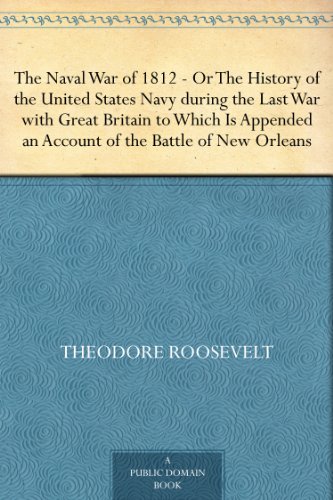
    eBook Review: The Naval War of 1812


    Theodore Roosevelt, The Naval War of 1812

    Product Details

    • File Size: 575 KB
    • Print length: 384 pages
    • Publisher: Public Domain Books (October 1, 2005)
    • Sold by: Amazon Digital Services
    • Language: English
    • ASIN: B000JQV2W0
    • Text-to-Speech: Enabled
    • Average Customer Review: 4.6 out of 5 stars (5 customer reviews)
    • Price: $0.00

    1. Short review: 

    2. Long review:
    2.1. What I liked:  Theodore Roosevelt (before he became the President of the United States) wrote in a simple, straightforward, modern style.
    Roller-coaster or walk-in-the-park? Oddly, kind of a roller coast. With a catfight.
    This book give good value for your money, but only for the hard-core naval history fanatics. Else it is not worth your time to download.

    2.2. What I did not like: Whoever scanned and uploaded the book did so with some skill but not enough. The tables Roosevelt carefully inserted into the text are scrambled. They can be deciphered with time and patience and a lot of reader knowledge; that is, you gotta know that 1,240 must refer to a ship's tonnage, not the weight of metal that it throws in a broadside. If you do not know your way around a ship -- starboard, larboard [archaic term for port], stem, topsail, capstan, keel, beam, forecastle, quarterdeck, stern chaser, kedge -- read another book.

    The Kindle edition omits the numerous action charts and paintings referred to in the text.

    2.3. Who I think is the audience:  Hard-core naval history fanatics.

    2.4. Is the book appropriate for children to read?  Yes, if the child in question is a hard-core naval history fanatic.

    2.5. On the basis of reading this book, will I buy the author's next book?  Yes, but there aren't any.

    2.6. Other:  Most people do not know that President McKinley appointed Theodore Roosevelt to the office of Assistant Secretary of the Navy. (Chase the link. It's worth your time.) [1897]

    TR first published this book a year after he graduated Harvard. [1881]

    This book is the equivalent of a doctoral dissertation in naval history. TR used primary sources:  original US Navy logs and documents and original letters. Where available, TR also used British source documents. In the book, he critiqued and criticized writers on both sides of the Atlantic for distorting the histories. But TR reserved his venom for British naval historian William James; TR wrote that James's history was mendacious; that is, he called the man a liar.

    TR organized the book masterfully. The organization follows:

    1812 [The year]
    1. On the seas. [Actions that occurred on the high seas.]
    2. On the lakes. [Actions that occurred on the Great Lakes or Lake Champlain.]

    1813
    1. On the seas.
    2. On the lakes.

    1814
    1. On the seas.
    2. On the lakes.

    1815
    1. On the seas.
    2. On the lakes.

    Simple and effective.

    Each year ends with a summary table of actions and losses. These tables are scrambled and can be read only with difficulty, but I found them informative.

    Those who are not hard-core naval history fanatics . . . why are you still reading this? Those who are, I found something of interest. To wit, there was only one action in which the British were clearly superior to the Americans: Shannon v Chesapeake. Why? Because Captain Broke disobeyed the Admiralty's orders and exercised his men at the guns each week for both speed and accuracy. That is, he trained his men for war. That training paid when he met the enemy. And his crew had been together for 7 years.

    By contrast, the crew of the Java had only been together 6 weeks when they were defeated by the Constitution. This should have been enough. Earlier that year, in only 6 weeks, Isaac Hull trained the crew of the Constitution well enough to outrun a British squadron. A month later -- 10 weeks with the crew together -- the Constitution destroyed the Guerriere.

    British crews were trained to fire fast but were not trained to fire accurately. American crews were trained to fire fast and accurately. In one of the frigate actions -- the United States v the Macedonian, I think --  the British fired three broadsides to the Americans two, but the American shot struck more often.

    In actions between ships of equal broadsides (or nearly so) -- that is, brigs -- the crews both British and American showed courage, but the Americans won the majority of the actions.

    Why?

    The typical American crew was better trained than its British counterpart.

    Why?

    The typical American officer was more diligent in the performance of his duties -- training his men -- than the typical British officer.

    Why?

    Edward Preble.

    Isaac Hull, William Bainbridge, Stephen Decatur, Charles Stewart, Thomas Macdonough, James Lawrence, David Porter -- names that ring through American naval history -- all these men captained ships during the War of 1812 and all served under Edward Preble during the First Barbary War. They were Preble's Boys. They learned their trade from a master of naval warfare, and they kept at it in the way Preble taught them. More, they passed on that diligent attention to the craft to their subordinates.

    The United States Navy owes its victories from Tripoli to Mobile Bay to Edward Preble.

    Four last items:

    I had forgotten how young Thomas Macdonough was when he commanded the American fleet on Lake Champlain: just 30. (TR gives his age as 28 -- an error.)

    TR often mentions Capitaine Jurien de la Graviere, Guerres Maritimes, as an unbiased source. I have not found an English-language edition of the work. I think that TR read it in French. Given his high praise for la Graviere's even-handedness, I would very much like to read Guerres Maritimes.

    Why TR included an account of the Battle of New Orleans in an appendix I do not know. Nothing in the account -- detailed and informative though it was -- concerned naval history. TR adored Andrew Jackson, but the account of the campaign reads differently than the rest of the book. The tone is different, the style is different. It feels like a much-loved college class assignment tacked onto the end of a dissertation. (There are several appendices. Some of them indicate that the book was published in several editions, and TR updated the book with a new appendix each time. At least one appendix answered his critics from across the pond.)

    The full title of the book is The Naval War of 1812 or the History of the United States Navy during the Last War with Great Britain to Which Is Appended an Account of the Battle of New Orleans. Aren't you glad I abbreviated the title? I know I am.

    2.7. Links:  Wikipedia on The Naval War of 1812 
                       The Naval War of 1812 from the Gutenberg Project

    2.8. Buy the book:  The Naval War of 1812
    ____________________